I work with small businesses all the time. I often work with businesses that are just getting started and also with businesses who, while they’ve been in business for a while, they really haven’t “turned up the heat” on their marketing.
One of the first things I coach businesses to do is to have their OWN email list and ALWAYS be building it! And I’m always surprised how many owners are afraid to email their list too much for fear of losing them off their list. Now, granted, I don’t think you need to be emailing your list 3 times a day 7 days a week. YES, that’s overkill and YES, they will unsubscribe. But there’s nothing wrong with a once a week email that they’ve opted in to receive as long as you continue to keep the content RELEVANT to them. Abuse that respect and yes, they will un-subscribe.
Many businesses don’t have a list and so they often go to social media to run ads to get their service/product in front of their desired audience. This is not a bad idea, especially when you don’t have a large list.
I have coached businesses to build Facebook & Instagram ads, and no, I don’t mean by clicking “boost”. You can gain a large audience when you run social ads carefully and strategically. If you run a lead ad for instance, then you can also gain more emails to add to your list. However, using social ads is essentially “renting” your audience one campaign at a time. You don’t “own” it (unless you’ve clearly gotten an opt-in from a lead ad). So if you’re merely running an ad and gaining no info… what happens when you want to reach that same audience again? You have to pay AGAIN.
I heard a conversation recently to say that Facebook was INCREASING the costs of its ads. But is it really? Or is it just becoming MORE competitive?
Facebook’s ad pricing works on an auction system where your cost is determined by an ad’s relevance, the ad bid you’re willing to pay, and the estimated action rate of your target audience. Advertisers set a budget and choose a campaign goal, such as generating clicks or impressions, and Facebook’s algorithm bids on their behalf to win auctions for the most relevant placements, ensuring ads reach users likely to engage. Factors like audience size, ad quality, competition, and industry also significantly influence your actual cost, as does the time of year. ( <– This definition is straight from a Google search. 😉 )
…Also on Google was the following….
Metrics You Pay For: Advertisers can pay for different outcomes, with common metrics including:
- Cost Per Click (CPC): The amount you pay each time someone clicks your ad.
- Cost Per Mille/Thousand Impressions (CPM): The amount you pay for 1,000 times your ad is displayed.
- Cost Per Install (CPI)/Cost Per Action (CPA): Costs for other specific results, such as app installations or leads.
So while yes, it may be more expensive now vs a few years ago, it may simply be due to the competitiveness and everyone finally making it to the social platform to advertise. Even still, I have personally been able to get what I considered to be good pricing for ads I’ve helped to run for a ministry for which I volunteer. I’ve gotten .08 to .22 cent per click to .24 cent per thousand impressions and even .03 cent for video ThruPlays on a video re-targeting ad. See below screenshot from their Ads Manager.
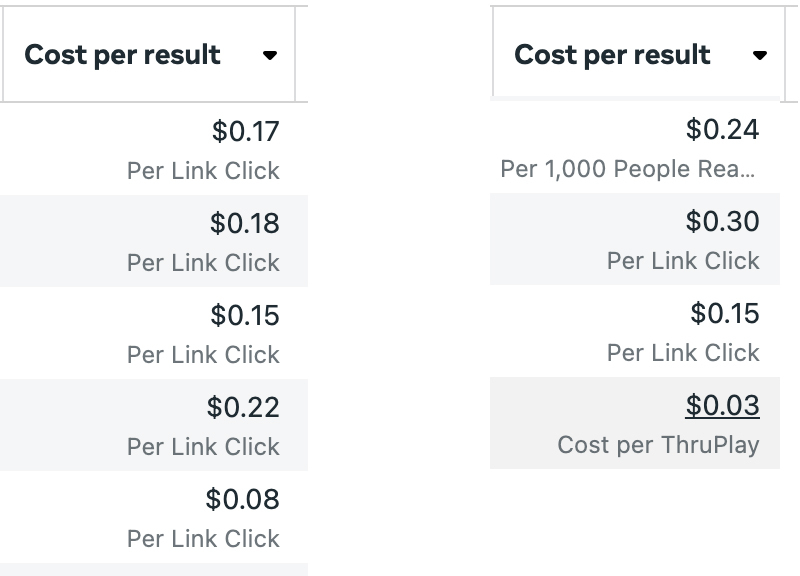
Those numbers seem really good, right? I’ve had a bit of experience with this. 😉 I’ve been building and running ads since 2016. But I digress…
You can’t always obtain similar results with every industry. The truth is that a “good” Cost Per Click (CPC) is going to be subjective and dependent on your industry, audience, campaign objective and ad quality… YES, ad QUALITY counts lots, too! Some benchmarks suggest an average CPC around $0.58 to $1.72, but your target will depend on the one that yields you profitable conversions.
No matter how good your cost is for ads, though, you’re still RENTING this audience vs. BUILDING your own. So circling BACK to building your email list… always be building it! You build your list with paid lead ads, but you can also do this through organic posts. It’s all in how you engage your followers alongside using an inexpensive software you can hook up to your Facebook page and help create a full “customer journey” with your business. It’s a bit much to explain in a blog post, but I’d be happy to show you how that works! Just give me a call and set up a time to chat!